You found the legging style you want to sell, screenshotted it, and sent the factory one line: 'make me this.' Three weeks later the sample is wrong in six places. The sample was never the problem—the brief was.
A sample is only as good as the brief behind it. Send a complete tech pack, or four answers—category, price, quantity, fabric—and the first sample matches your plan.
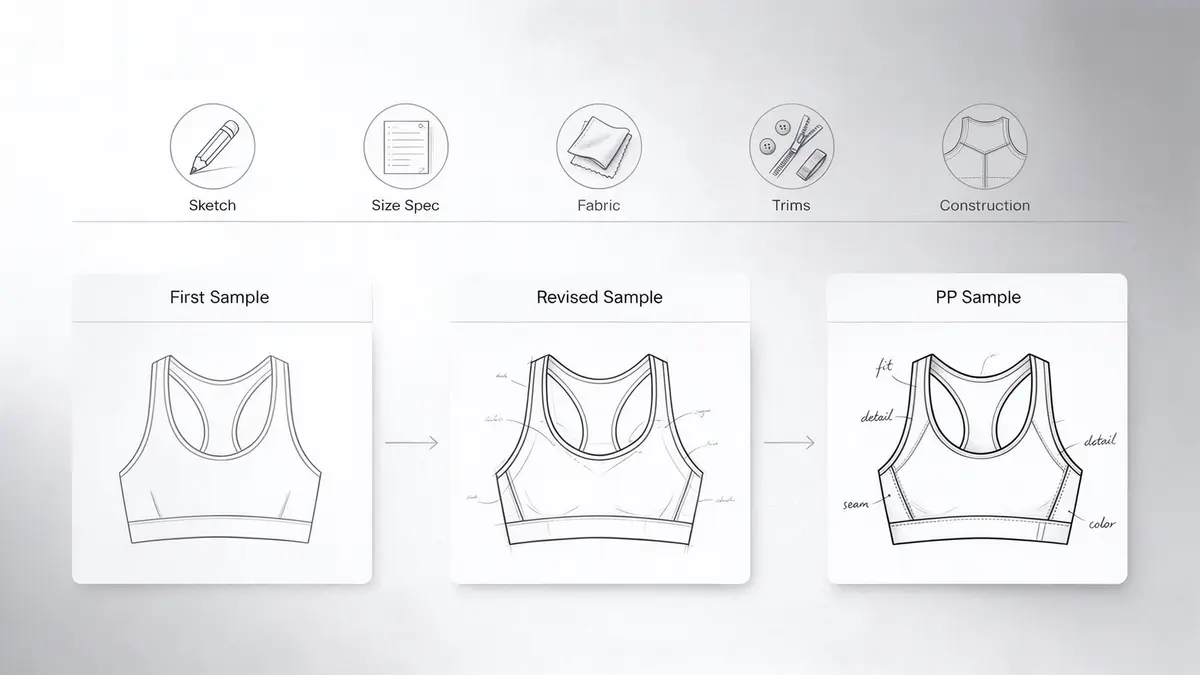
- A complete tech pack has five elements: sketch, size spec, fabric, trims and construction notes
- First samples for standard styles take about 7–10 days; custom dyeing and composite finishing add time
- Sample fees usually include one or two revision rounds; extra rounds are charged separately
- The sample fee is deducted from your bulk order at most factories—ours included
- The confirmed PP sample is made in bulk fabric with bulk processes, so what you approve is what you get
Skip the guesswork. Here is exactly what to prepare before you press send on a sample request.
What Is a Tech Pack, and Why Is It Your Starting Point?
A tech pack is the construction drawing of your product: the style sketch, the size spec, the fabric requirement, the trim list and the construction notes. When it is complete, the pattern maker, cutter and sample sewer all work from the same document—and stop asking you questions.
In our sample room, incompleteness is the most common reason development stalls. No size spec means no pattern. No fabric information means no accurate price. No trim list means the cost estimate is wrong. Before you send anything, run the five-minute check: could a stranger who has never seen your product build it from this document?
If something is missing, send the missing piece. Do not let the factory fill the gap with guesses. A factory that improvises is a factory you cannot quote against—and a sample you cannot compare with the next supplier's.
Table 1 — What a complete tech pack looks like
| Element | What it contains | If it's missing |
|---|---|---|
| Style sketch | Flat drawing, front + back, seam lines | Pattern maker guesses the silhouette |
| Size spec | Key measurements per size (waist, rise, inseam, etc.) | No pattern can be made |
| Fabric spec | Composition, weight (GSM), color, source | No reliable price or hand-feel |
| Trim list | Zippers, cords, labels, elastics, hardware | Cost estimate comes out wrong |
| Construction notes | Stitch type, seams, logo placement, finishing | Sample differs from what you imagined |
A great tech pack is about completeness, not polish. Simple flat sketches with correct proportions beat pretty drawings with no measurements.
No Tech Pack Yet? Start With These Four Questions
Many brands reach out with only a reference photo or an existing sample—no tech pack at all. That is fine; we develop from reference images every week. But to start, we ask you four questions, and your answers decide everything downstream.
What category and silhouette? Leggings, sports bra, tank, hoodie? High-rise or mid-rise? A photo shows the look; your words confirm the intent.
What target price? This decides the fabric tier and the finishing level we propose. A $6 legging and a $12 legging are engineered differently.
What approximate quantity? It affects MOQ fit and whether custom-dyed fabric is realistic for this project.
Is the fabric specified? Send the composition and weight if you have it. If not, we pull options from our in-stock fabric library and send swatches.
The clearer these four answers are, the fewer samples you pay for. Vague briefs are the single biggest driver of revision rounds—and every extra round costs time and money on both sides.
If your project is a modification of one of our existing styles—a fabric swap, a logo change—tell us. This semi-OEM, semi-ODM path is where communication gets heaviest, but it is also where our style library does the heavy lifting and saves you a full pattern round.
First Sample, Revised Sample, PP Sample: How the Stages Work
Sample development rarely happens in one shot. It moves through three stages, and each has a different job.
First sample (fit/development sample): validates style and pattern. You check silhouette and proportions. Expect the most changes here—waistband height, strap length, pocket placement.
Revised sample: incorporates your feedback on details. This is where the garment starts to feel like yours.
PP sample (pre-production / counter sample): the final confirmation version. Once approved, bulk production follows its measurements and processes.
The rule we push to every client: only written confirmation moves a project forward. A verbal 'looks good' on a call does not release production. Reply to the sample photo with a short written list—'approved, adjust nothing' or 'approved, change the pocket angle on the revised round.' It protects you as much as it protects the factory.
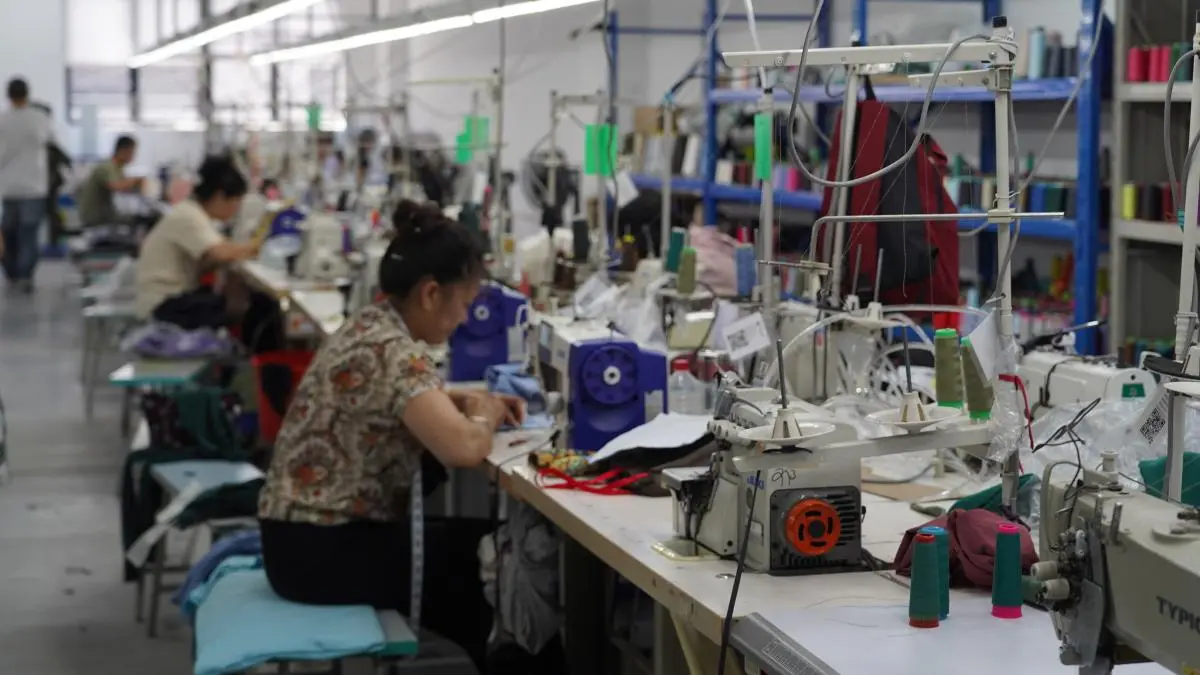
The PP sample deserves special care. It should be made from the actual bulk fabric with the actual bulk processes. If a factory shows you a hand-finished museum piece as the PP sample, then runs bulk on a faster line, you get two different products. We make PP samples exactly as bulk will run—and we say so in writing, because that promise is the point of the stage.
What Actually Drives Your Sample Cost and Lead Time?
Two numbers matter to every brand: how long and how much.
Lead time. A first sample for a standard style takes about 7–10 days. Add time for embroidery, bonding, lamination or other composite finishing. If the fabric is custom-dyed, add the dyeing window—anywhere from a few days to two weeks on top. When we promise a date, we include the sampling and confirmation windows in the schedule. That is how you avoid the 'we need it yesterday' conversation later.
Cost. Sample fees have no single standard. They follow the fabric cost, the construction complexity and the number of revision rounds. One or two revision rounds are usually included; beyond that, each round is charged. Two things make this easier to accept:
- The sample fee is deducted from your bulk order—a common industry practice that filters out sample-only enquiries and protects the factory's pattern investment.
- Sample shipping is normally on the customer; sample making is on the factory. Prepaid or collect, both work.
Ask for the deduction rule in writing before you pay. A factory that states it plainly is a factory that expects you to come back with a real order.
In-Stock or Custom-Dyed: Which Fabric Should the First Sample Use?
Your fabric choice is the single biggest lever on price, lead time and MOQ. Most first projects should start from in-stock fabric—it is faster, cheaper to sample, and has no dyeing MOQ. Custom-dyed fabric gives you an exact brand color but adds color matching, dyeing time and a higher fabric MOQ.
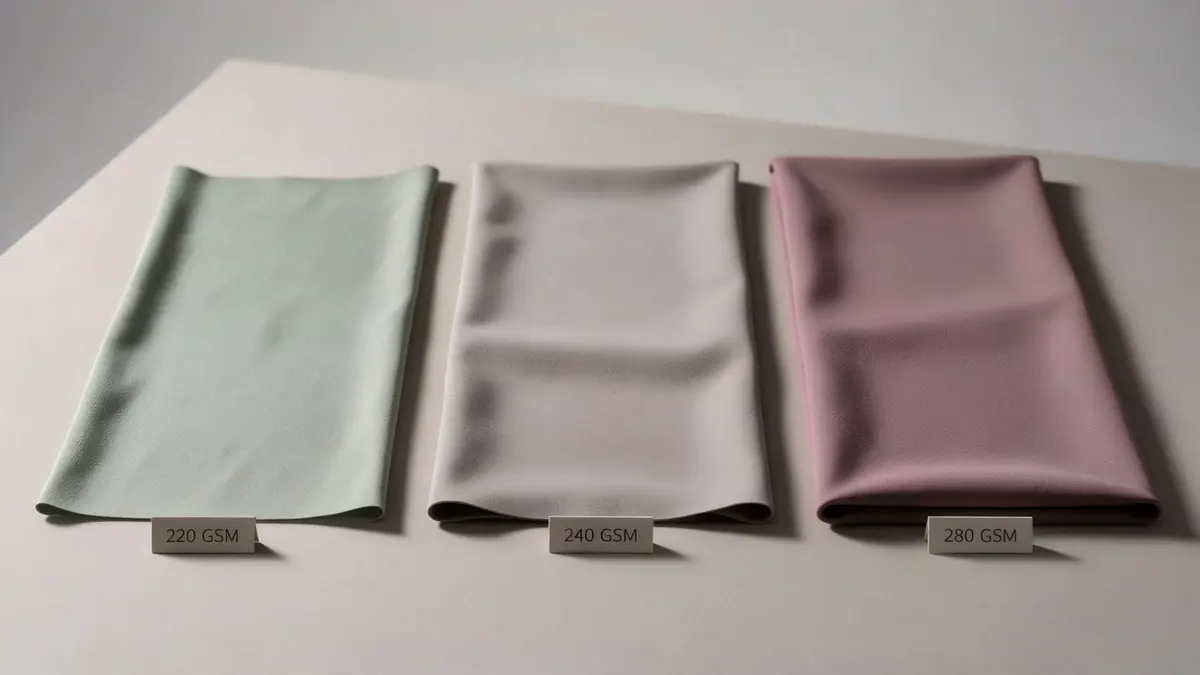
Opacity is an engineering problem, not a marketing claim. A standard yoga legging starts around 180 GSM; for light colors we recommend 200 GSM and above, plus a lining strategy if needed. If you write 'squat-proof' in the brief but no GSM, the sample is a lottery ticket.
Table 2 — In-stock fabric vs custom-dyed
| Factor | In-stock fabric | Custom-dyed fabric |
|---|---|---|
| Sampling speed | Fast—fabric is ready | Slower—dyeing window added |
| Color | From our library | Your exact brand color |
| MOQ impact | Standard MOQ applies | Higher fabric MOQ |
| Best for | First orders, testing a style | A confirmed line you plan to scale |
Almost everything in a sample can be customized, but weight matters. Logo (print or embroidery) is the lightest customization with the shortest lead time. Changing colors from our stock library is also light. Changing pattern details—waistband height, inseam, collar or strap shape—is medium. Developing a new fabric is heavy. If you want all of them at once, the cost stacks; we will tell you plainly what to cut.
MOQ follows the same logic. Standard MOQ is 500 pcs per style per color, with some styles down to 300; custom-dyed fabric sits higher because dyeing has its own minimums. Below MOQ? Combine colors, pick in-stock fabric, or run a small trial order first and reorder. Every option beats silence.
What Should Come Back to You With the Sample?
A good factory does not hand you a garment and stop. Along with the sample you should receive the documents that make it usable:
- The sample garment itself, tagged with the style and version
- The size spec / measurement sheet for the sample
- Fabric swatches or a color card, for matching and approval
- Test reports and factory audit documents—BSCI (Business Social Compliance Initiative), ISO, plus OEKO-TEX and GRS (Global Recycled Standard) fabric support and third-party reports (SGS, Intertek) arranged per order[2]
- Packing and shipping documentation when the order moves forward
Ask for these before you pay, not after. Most B2B customers need the audit and test paperwork for their listings, customs and brand claims. A factory that has it ready to send beats one that needs three follow-ups.
One internal habit worth stealing: before bulk starts, we send a pre-production sample and, where relevant, a hand-feel sample from the actual bulk batch, produced from the same dye lot wherever possible. Batch-to-batch hand differences exist in every fabric mill; same-lot production keeps them invisible.
The Pre-Sample Checklist: Run This Before You Send the Brief
Before you press send, run through this list:
- Category and silhouette, in words—not just a photo
- Target price per unit, and whether the sample fee deducts from bulk
- Estimated quantity, to check MOQ fit
- Fabric: composition + GSM, or 'recommend from your library'
- Logo file and placement, if any (print or embroidery)
- Which stage you want: first, revised or PP
- Written confirmation habit: reply to every sample round in text
Tick every box and the factory can start the same day with a timeline and a fee. Miss any box and you are paying for the guesswork later.
A sample is where a spec sheet becomes a product. The closer your PP sample is to bulk, the fewer surprises there are on both sides.
Request a Sample
You have the checklist. Now the shortcut: send your tech pack or reference photo with the four answers—category, target price, quantity, fabric—and we will respond the same day with a sample timeline and fee, including the deduction rule, in writing. For styles already in our library, we can often start the first sample without a full pattern round.
Send your idea: Start your sample request
or browse our leggings category
Related reading from LAVYSEN Insights:
- How to Choose the Right Fabric for Your Activewear Brand
- Inside an Activewear Factory: What to Review
- Logo Customization Options for Activewear
FAQ
1. How long does it take to get an activewear sample?
For a standard style, the first sample takes about 7–10 days. Composite finishing adds time, and custom-dyed fabric adds the dyeing window on top. Ask for a timeline that includes sampling and confirmation, not just sewing.
2. How much does sample making cost?
It depends on fabric cost, construction complexity and revision rounds. One or two rounds are normally included. Confirm in writing: what extra rounds cost, and whether the fee deducts from your bulk order.
3. What is a tech pack, and do I really need one?
A tech pack is the document that describes your product: sketch, size spec, fabric, trims and construction notes. You need it for an accurate quote and a sample that matches intent. No tech pack yet? Answer the four questions instead, and most factories can start from a reference photo.
4. Can I get my logo on the sample?
Yes—print and embroidery are both supported. Send the logo file and we will put the logo effect on the sample for confirmation, with separate pricing for the two techniques.
5. Are samples free if I place a bulk order?
Sample making is on the factory; the quoted sample fee is normally deducted from your bulk order. Shipping is on the customer (prepaid or collect). Confirm the deduction rule in writing before you pay.
Buyer FAQ
1. Do you deduct sample fees from bulk orders?
Yes, we do. Ask for the deduction rule in writing before you pay, so the credit is tracked when bulk begins.
2. What paperwork comes with a sample order?
Size spec, fabric swatches or a color card, and—per order—test reports and audit documents (BSCI, ISO, OEKO-TEX / GRS fabric support, SGS / Intertek)[2].
3. Can you start from a reference photo if we have no tech pack?
Yes. We develop from reference images every week, but we still need your four answers—category, target price, quantity and fabric—before quoting.
Sources
[1] LAVYSEN internal production handbook (2026): tech pack structure, sample stages, lead times, MOQ and customization capability—factory first-party data.
[2] LAVYSEN factory capability list: BSCI, ISO, OEKO-TEX / GRS fabric support, SGS / Intertek third-party testing.
About LAVYSEN
LAVYSEN is a manufacturer of activewear and yoga wear with our own sample room, pattern team and production line. We develop OEM, ODM and semi-custom projects for brands in Europe and North America—1,000+ styles made from concept to bulk, with samples, size specs, color cards and test reports included.