A US-based startup wanted a naked-feel legging that kept its shape. Three sampling rounds on one library fabric code got them to bulk.
01 — A Handfeel First, a Tech Pack Second
The client was a US-based activewear startup, still pre-launch. They arrived with a handfeel, not a tech pack: buttery, second-skin, high-waist, and above all — no see-through under a squat, no baggy knees by the end of the day. Their previous supplier had sent a sample that felt lovely in the hand and failed in practice. It rolled at the waist and went translucent on the squat test.
They brought us that failed sample and one question: can you make this, but make it right?
We get this a lot, and it is a fair question. A good handfeel is a feeling; a locked product is a set of numbers. Our job in this case was to turn "buttery and no see-through" into composition, GSM, stretch and recovery data that a cutting table could follow.
02 — One Code, Three Rounds
Round zero: match, don't develop. Instead of developing a new fabric from zero, we matched the handfeel target against our fabric library — real codes with composition, GSM and test records on file. GZ2330N, 75% nylon and 25% Lycra at 220gsm, sat almost exactly where the client's hand said "yes". Matching a library code instead of commissioning a new development saved the client the fabric-development cost and the wait that comes with it.
Round one: the construction, not the fabric, was the problem. First samples came back in 7 days. The fabric itself performed — stretch and recovery numbers on spec — but two things showed up on the wear test: the waistband rolled during a squat, and the side seam twisted slightly after a full wash cycle. The fabric was right; the make-up was not.
Round two: fix the make-up, keep the code. We adjusted the elastic spec and the seam construction, and re-ran the same tests. The waistband stayed flat through the squat test this time. The remaining issue was quieter: after 20 wash cycles, recovery was coming back softer than we wanted — the knee line held, but the waist was losing its grip. That is the kind of problem that only shows up in the wash test, never in the showroom.
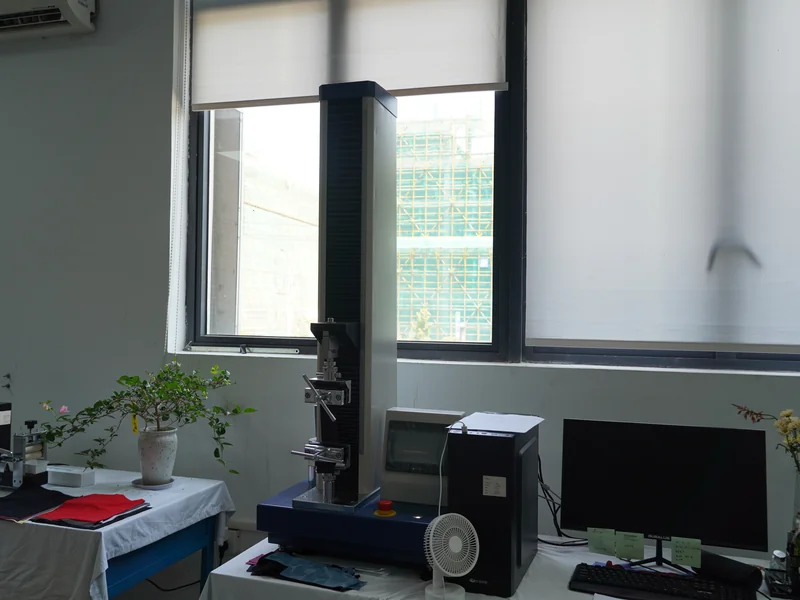
Round three: lock it. A heat-setting adjustment on the waistband restored the recovery curve, and the third round passed every check: squat test at 100% stretch, 20 wash cycles with shrinkage inside 3%, colorfastness graded 4 under European Standard methods, and stretch-recovery data written onto the spec sheet. The code was locked.
Every round took 7–10 days. Every round produced data, not opinions. That is the part of development most buyers never see — and the part that decides whether the product works a year later.
03 — 300 Pieces, Two Colors, On Spec
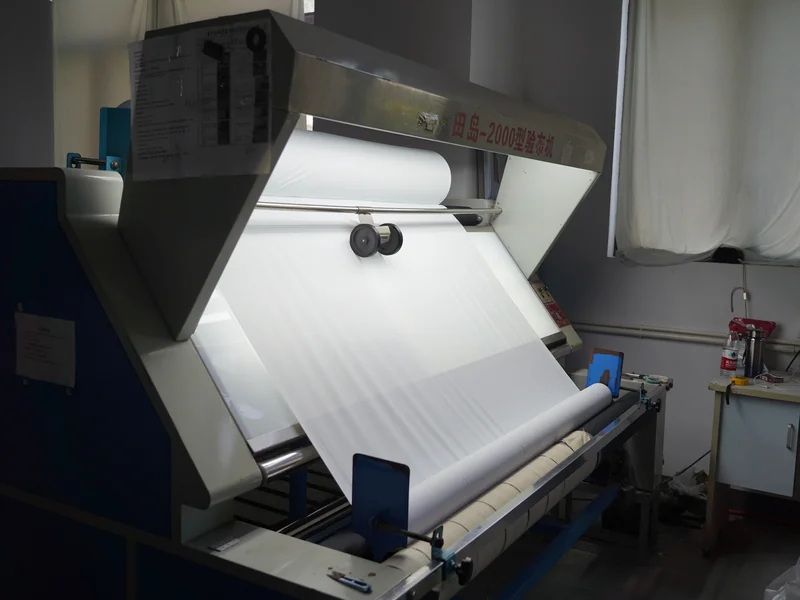
The first bulk order ran at 300 pcs per color across two stock colorways — within the per-style, per-color MOQ of 300 pcs that we quote on the site. Bulk followed the locked spec with no re-engineering. Final inspection ran to AQL 2.5, and the order shipped on schedule.
The client now reorders the same style using the same code. The second order needed zero sampling rounds, because the pattern, the fabric and the process were already in our records.
04 — Why This Case Is on Our Website
This is a small order and a short story. It is on our website because it shows how we work: we match fabric from a library before we develop, we test in rounds with numbers instead of adjectives, and we write the results down so the next order is a conversation, not a gamble.
Most activewear brands do not need a factory that can develop anything. They need one that can lock the right thing, fast, and reproduce it every time. That is what this case is about.
Ready to lock your legging the same way? Request a 1-piece sample of GZ2330N or start a development — [contact our team] (https://www.lavysen.com/contact) or browse [our products] (https://www.lavysen.com/products). Related reading: [how we choose fabric for activewear] (https://www.lavysen.com/insights/).