Incoming quality
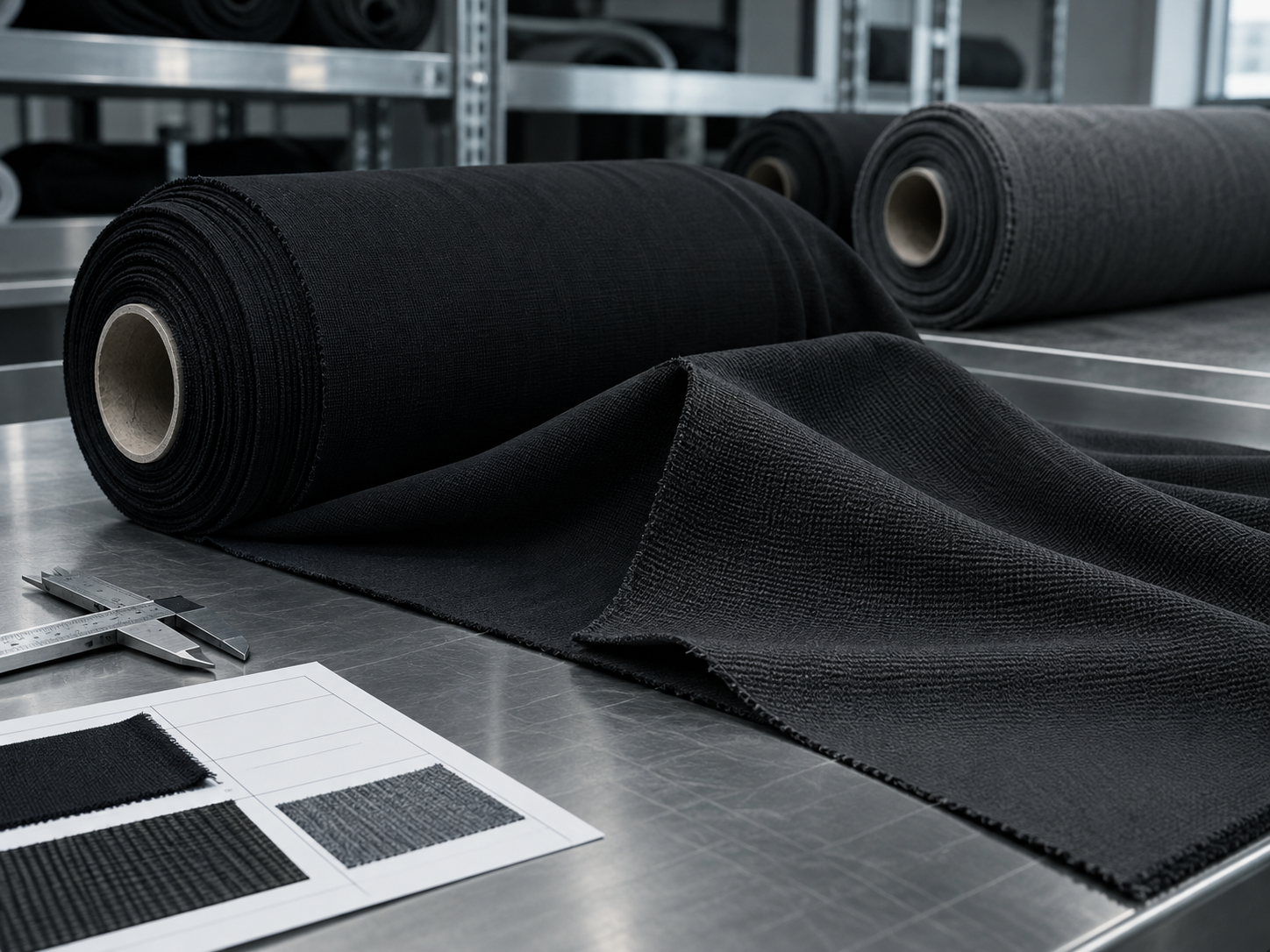
Fabric, trims, shade and lot inspection
Define the reference, check the product, record the evidence, correct deviations and authorize release against the agreed specification.
QA defines the standard and prevention process. QC checks the product against the current approved reference.

Inspection scope and frequency are agreed for the product, material and production stage.
Fabric, trims, shade and lot inspection
Initial construction against approved PPS
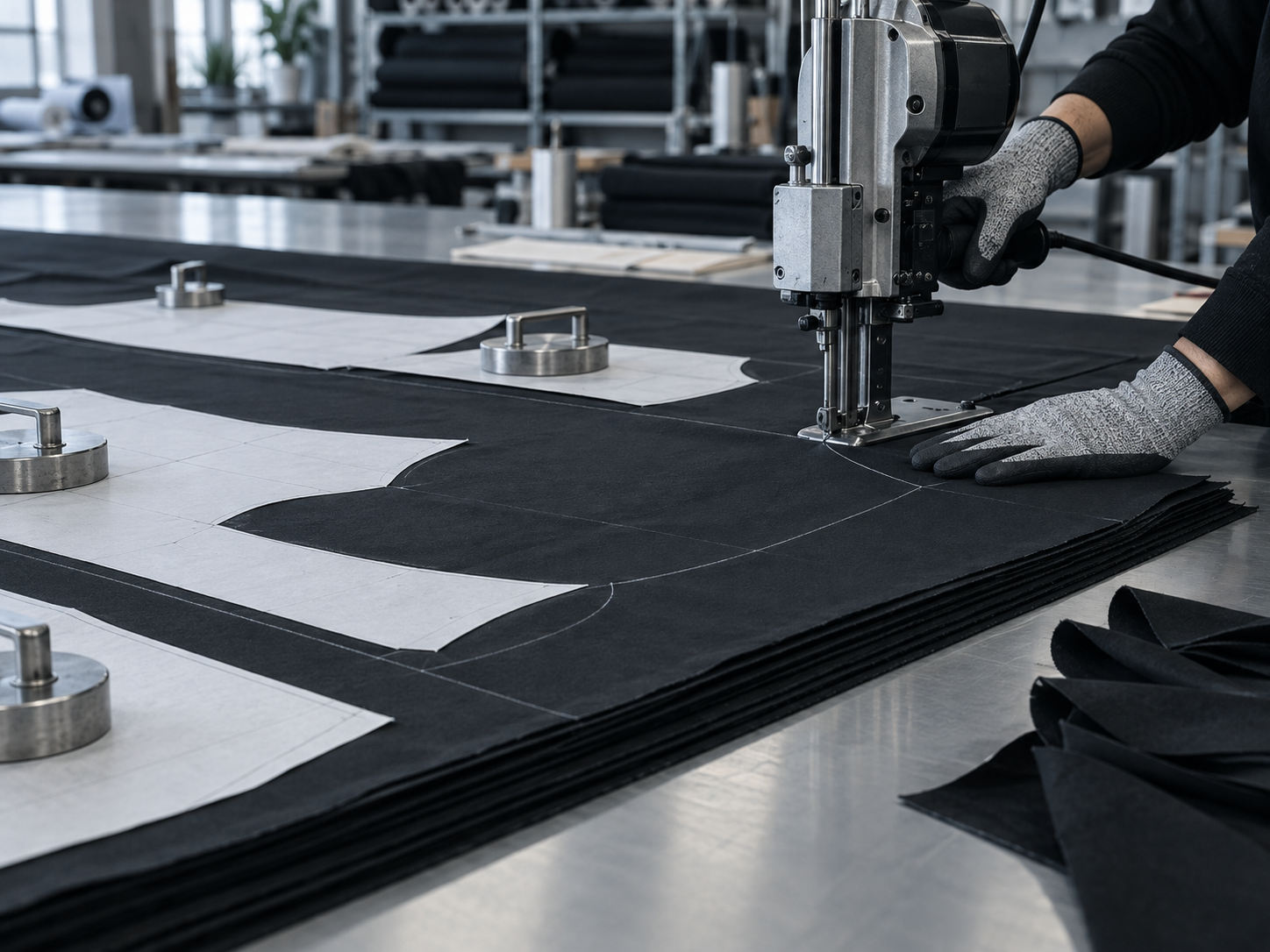
In-process stitch and appearance checks

Defined POM method and tolerance

Agreed stretch, recovery and durability methods

Sampling, packing and release decision
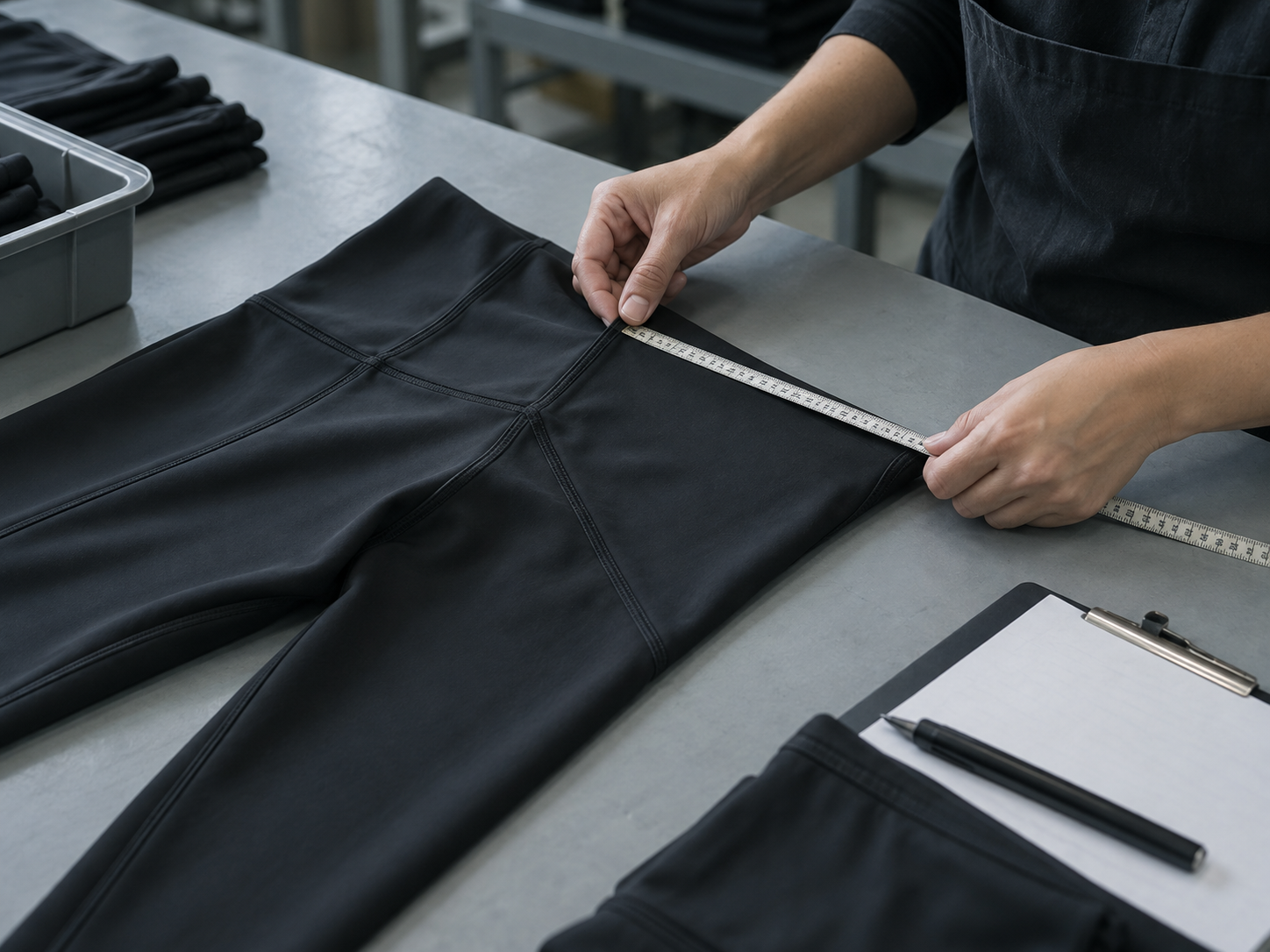
Evidence required: incoming sheet, first-piece approval, line checklist, POM record, scoped test report and final inspection. Images are illustrative until matched to verified records.
Safety or applicable compliance risk

Function, fit or saleability issue
Limited appearance deviation
A finding should identify the affected order, material and production location.
Contain the affected goods, establish the cause and verify the correction before release.
Record the deviation against the agreed standard
Hold and identify the affected goods
Determine scope, severity and disposition
Review material, method, equipment and handling
Apply approved rework or corrective action
Check corrected goods and record the result
Carry preventive action into the controlled process
Reserve the defect photograph, hold tag, root-cause review, rework record and re-inspection result for the same PO and lot. No actual CAPA record has been supplied for publication.
Shipment follows the agreed acceptance plan and an authorized release decision.
Source of standards: Use the customer's Tech Pack, approved PPS, golden sample, measurement specification and BOM. QC must work from the latest approved revision.
Incoming quality: Inspect Fabric Code, shade, width, GSM, defects and dye lot; inspect elastics, threads, zippers, pads, labels, logos, hangtags and packaging. Hold or reject nonconforming lots and record the disposition.
Cutting and first article: Confirm fabric relaxation, spreading direction, marker and pattern version, cut-part ID and the first article against PPS, POM, logo and packing requirements.
Inline QC: At an agreed production stage, sample seams, skipped stitches, waviness, measurements, logo and symmetry. Define line frequency, reaction, owner and record; stop, rework, adjust and reinspect where needed.
Garment workmanship: Use a visual defect standard for skipped or broken stitches, loose threads, holes, stains, seam waviness, twisting and asymmetry. Inspect high-stretch gusset, waistband, side-seam and strap zones.
Measurements and fit: Measure every defined POM against its own tolerance using a consistent flat or stretched method. Sample multiple sizes; passing dimensions does not replace movement and fit review.
Fabric and functional testing: Specify GSM, shrinkage, colorfastness, pilling, stretch, recovery, conditional opacity, wash and logo durability. The test sample, method, color, GSM and extension must be recorded; third-party testing is available by agreement.
Final inspection: After sufficient bulk completion and packing, check quantity, size, color, workmanship, POM, logo, labels, barcode, assortment and carton marks. Use AQL 2.5 or the buyer's agreed sampling plan; hold, rework, replace or reinspect a rejected lot.
Defect grading: Classify Critical safety or compliance faults, Major function or saleability faults and Minor appearance deviations. Keep an approved photo library for accept / reject decisions.
Traceability and records: Link PO, lot, line, date, fabric and trim batches. Retain incoming, inline, measurement, final and test records against the latest approved PPS and version.
Nonconformance and CAPA: Record and isolate the issue, assess root cause across people, machinery, materials, method and environment, then correct, reinspect and update SOP, checklist or training.
Third-party and buyer participation: Allow agreed buyer QC or third-party on-site or video inspection. Share packing list, size breakdown, standard and PPS reference before inspection; define failed-inspection responsibility and reinspection.
Quality team and authority: Verify QA Manager, inline QC, final QC and lab roles. Define stop-line and stop-shipment authority, training and KPI such as first-pass yield, defect and rework rates before publishing actual values.
Repeat orders and scale: Carry forward the approved Fabric Code, pattern, PPS, BOM, QC standard and prior CAPA. Reconfirm new dye lots and increase inspection resources when output scales.
Certification file: Show OEKO-TEX, BSCI, GRS, SEDEX, WRAP or ISO only if an actual file states number, holder, validity and whether it covers factory, fabric or product. Do not claim blanket US compliance.
Share the product and inspection scope to review the applicable QC reference.